What Applied AI Work Actually Looks Like
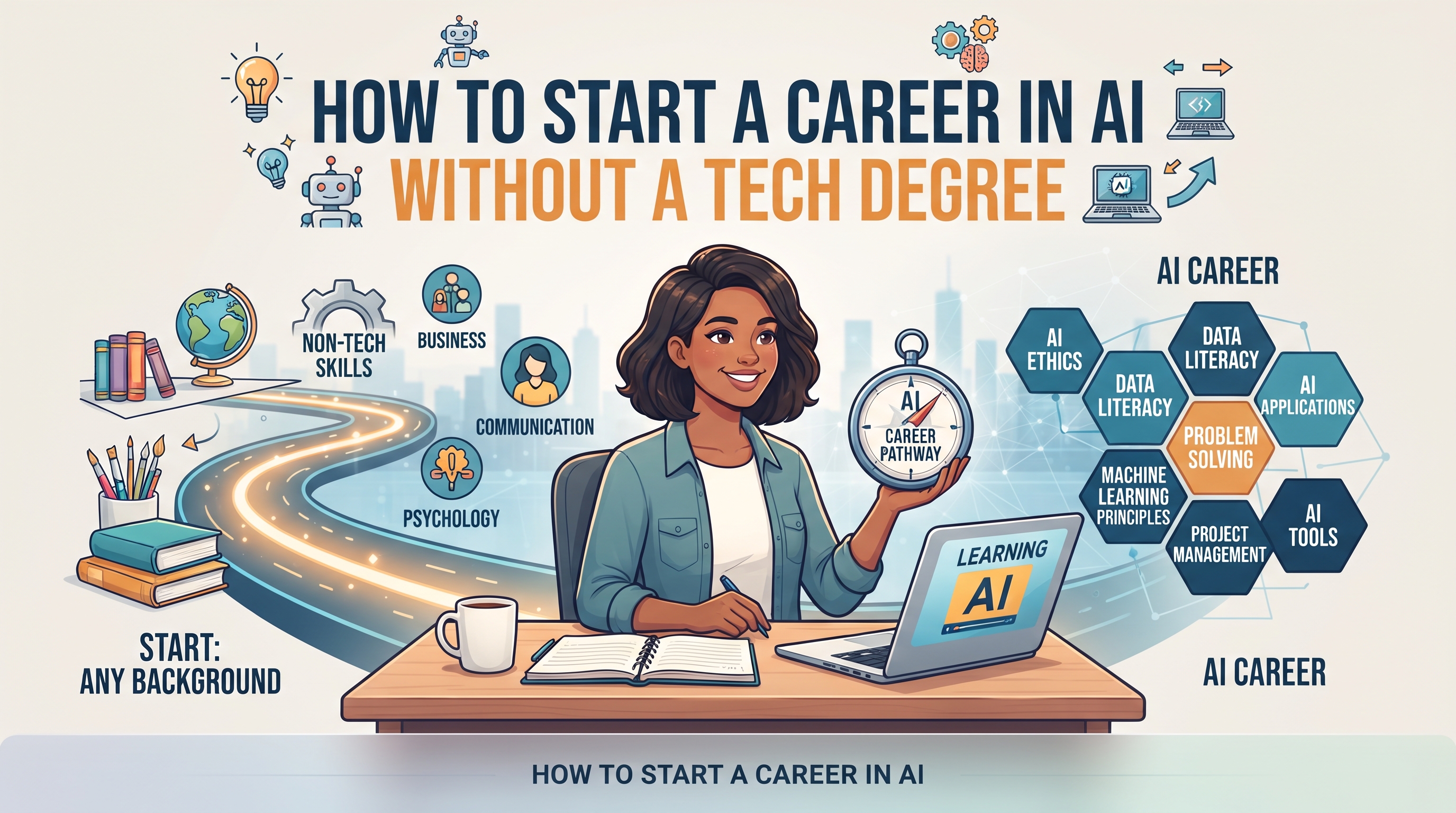
Most real-world AI roles aren't about building models from scratch, that's a specialised research discipline. They're about applying existing AI tools effectively: automating repetitive workflows, evaluating whether an AI's output is actually good enough to use, and integrating these tools into how a business already operates.
This distinction matters enormously for accessibility. Applied AI work is learnable through structured, practical training, it doesn't require the advanced mathematics and years of specialised study that AI research or model-building demands.
The Skills Companies Are Actually Hiring For
Prompt engineering has emerged as a genuinely valuable skill on its own, knowing how to structure requests to AI tools to get consistently useful, accurate output rather than generic or unreliable results. Model evaluation teaches you to judge whether an AI's output is actually good enough to use, a skill that matters more as more decisions get AI-assisted.
AI workflow automation is where a lot of the practical business value lives, connecting AI tools into existing processes so repetitive work genuinely gets faster. Data preparation and applied machine learning round out a practical foundation for working effectively alongside these tools.
How VAA Global's Artificial Intelligence Course Builds This
VAA Global's Artificial Intelligence course runs 10 weeks, covering prompt engineering, model evaluation, AI workflow automation, data preparation, and applied machine learning, using tools like ChatGPT, Python, Jupyter Notebook, Hugging Face, and Zapier.
The course is built around practical application, not theoretical AI research, so you graduate able to actually put these tools to work, not just explain how they function. Every VAA Global course includes a 2-month internship, 2 certificates, and job placement assistance.
Why This Skill Set Is in Genuine Demand
McKinsey's ongoing State of AI research has consistently found that companies successfully adopting AI credit workflow integration and employee AI fluency, not just having access to the tools, as the real differentiator, which is exactly the applied skill set this kind of training builds.
If you want a more data-analysis-focused angle on this space, Data Analysis or Data Science might complement this well, or take the free Career Compass quiz to compare.
Common Mistakes Beginners Make in This Field
A common beginner mistake is accepting AI output uncritically, treating it as automatically correct rather than something that needs review and judgment. Learning to evaluate whether an AI's response is actually accurate and useful is arguably the more important skill than learning to prompt it well in the first place.
A second mistake is writing vague, unstructured prompts and then blaming the tool for poor results. Getting genuinely useful output requires clear, specific instructions, much like briefing a human colleague, an underspecified request tends to produce an underspecified answer.
A third mistake is trying to automate a process before actually understanding it manually. Automating a broken or poorly understood workflow just makes mistakes happen faster, which is why understanding the underlying process first matters more than jumping straight to automation.
What Your First Few Weeks Actually Look Like
Early weeks in VAA Global's Artificial Intelligence course focus on prompt engineering fundamentals, learning to structure requests that consistently produce useful output.
The middle weeks bring in model evaluation and data preparation, developing the judgment to know when AI output is actually good enough to use. The final weeks cover workflow automation, building something real, before the 2-month internship.
It's also worth understanding that different AI tools have genuinely different strengths, some excel at structured data tasks, others at open-ended writing, and part of building real fluency with these tools is learning which tool actually fits which specific task, rather than treating them as interchangeable.
Beyond the specific techniques, this field also rewards staying genuinely current, since the tools and best practices around applied AI are evolving quickly, and the habit of continuing to experiment and learn after the course ends is often what separates someone who stays competitive in this space from someone whose skills quietly become outdated within a year or two.
VAA Global Talent at talent.vaaglobal.tech exists specifically to close this gap, connecting graduates directly with employers who are actively hiring.
Before you start applying, it's worth running your CV through VAA Global's free review tool at vaaglobal.tech/cv-review to make sure it actually reflects what you've built.
According to Buffer State of Remote Work Survey, this trend has held steady across multiple years of tracking, not just a short-lived shift.
FlexJobs Remote Work Trends Report has published research specifically on this, and it lines up closely with what's described here.
Starting Your AI Career
A career in applied AI is genuinely open to people without a technical degree, if you build the right practical skills deliberately. If you're ready to start, you can apply to VAA Global's Artificial Intelligence course.