What Project Managers Actually Do
The role centres on keeping a project moving toward a clear goal: planning out what needs to happen and when, coordinating everyone involved, tracking budget and timeline, and catching problems before they derail the whole thing. It's equal parts organisation, communication, and calm problem-solving under pressure.
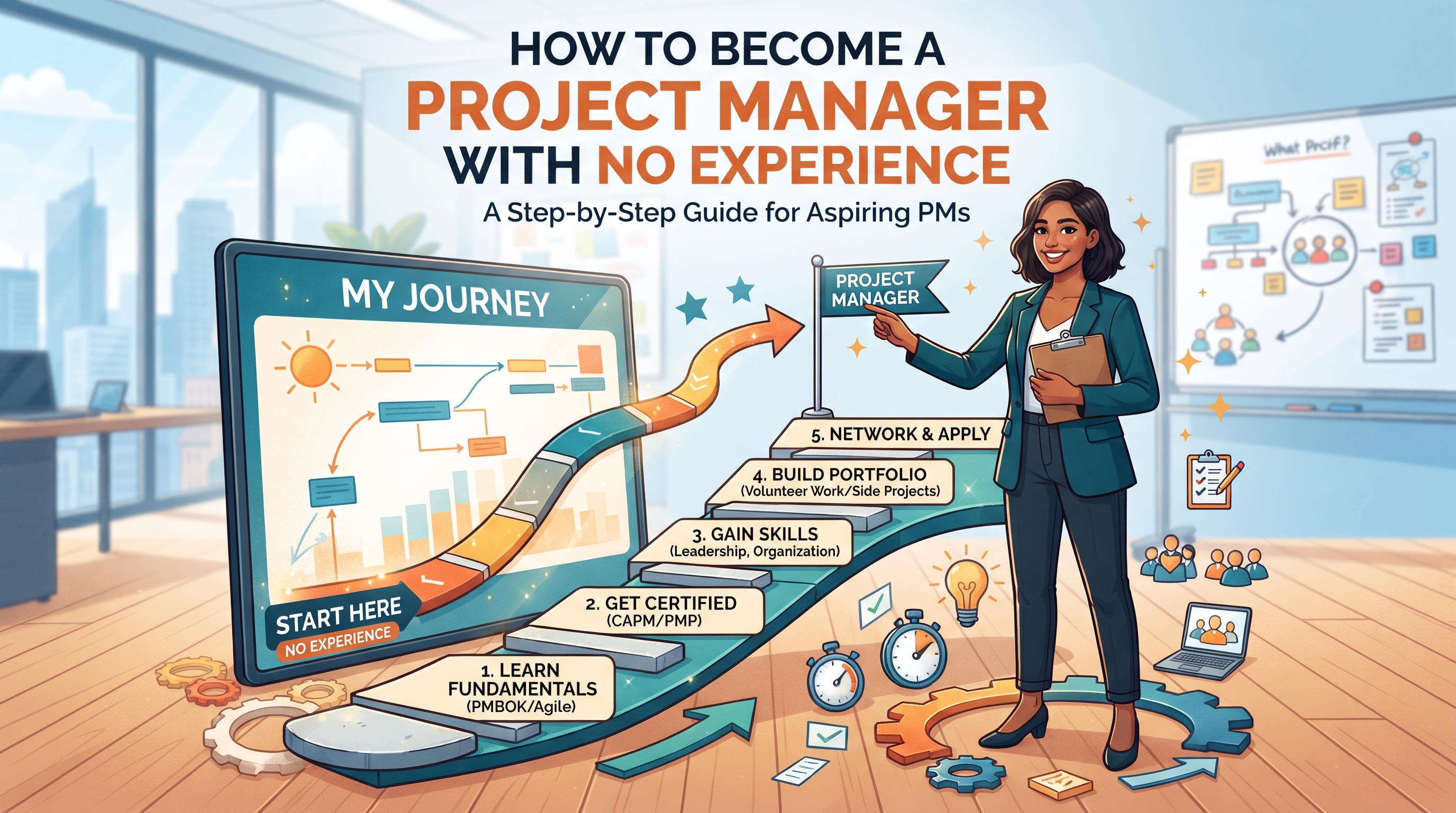
Entry-level roles focus more on the coordination side, scheduling, documentation, keeping the project tracker accurate, while full ownership of budget and stakeholder strategy typically comes with experience. This makes the entry point genuinely learnable, not something that requires years of prior management experience.
The Core Skills Worth Building
Project planning is foundational, breaking a large goal into a realistic sequence of tasks and milestones. Stakeholder management teaches you to keep everyone involved informed and aligned, often the difference between a smooth project and a chaotic one.
Risk management means thinking ahead about what could go wrong before it does, not just reacting when it happens. Sprint planning and budget tracking round out a practical toolkit, especially relevant for tech and marketing project environments that run in structured cycles.
How VAA Global's Project Management Course Builds This
VAA Global's Project and Program Management course runs 10 weeks, covering project planning, stakeholder management, risk management, sprint planning, and budget tracking, using tools like Asana, Trello, and Google Sheets, the actual tools most PM teams rely on.
You'll work through realistic project scenarios throughout, building the kind of practical experience that gets you taken seriously for a Coordinator or entry-level PM role. Every VAA Global course includes a 2-month internship, 2 certificates, and job placement assistance.
Why Project Management Skills Stay Valuable
The Project Management Institute's Talent Gap research has repeatedly projected substantial global demand growth for project-oriented roles over the coming years, driven by the simple fact that more work is organised into discrete projects requiring someone to actually manage them well.
If you're unsure whether project management or a more specialised path fits you better, the free Career Compass quiz can help you compare it against courses like Business Analysis or Operations Management.
Common Mistakes Beginners Make in This Field
A common beginner mistake is creating an overly optimistic timeline that doesn't account for realistic delays, which sets a project up to look like it's failing even when progress is genuinely fine. Building in reasonable buffer time isn't pessimism, it's realistic planning that protects both the team and the project's credibility.
A second mistake is under-communicating with stakeholders, assuming no news is good news, when in reality stakeholders generally want regular updates even when there's nothing dramatic to report. Silence tends to create anxiety and erodes trust, even when the project itself is actually on track.
A third mistake is treating risk management as a one-time exercise at the start of a project rather than an ongoing practice. New risks emerge as a project progresses, and revisiting your risk assessment regularly catches problems while they're still manageable.
What Your First Few Weeks Actually Look Like
Early weeks in VAA Global's Project and Program Management course focus on project planning fundamentals, learning to break down a goal into a realistic, sequenced plan.
The middle weeks bring in stakeholder management and risk analysis, practising the communication and foresight the role genuinely demands. The final weeks cover sprint planning and budget tracking, before the 2-month internship gives you a real project to help coordinate.
It's also worth setting a realistic expectation about the role's variability, a project rarely goes exactly according to the original plan, and a genuinely good project manager treats adjustment as a normal part of the job rather than a sign something has gone wrong.
Employers hiring for project coordination roles also consistently value candidates who can point to a specific example of catching a problem early, since that kind of proactive thinking is harder to teach than the mechanics of any single tool.
When you're ready to start applying, VAA Global Talent at talent.vaaglobal.tech gives you direct access to real employers looking for graduates with this background.
Once you have real experience to show, the free CV and LinkedIn review tool at vaaglobal.tech/cv-review can help you present it in a way that actually gets noticed.
World Economic Forum Future of Jobs Report has tracked this pattern closely, and their findings reinforce exactly the point made here.
According to National Association of Colleges and Employers (NACE), this trend has held steady across multiple years of tracking, not just a short-lived shift.
Starting Your PM Career
Project management rewards organisation and clear communication, not years of prior title-holding. If that sounds like your strength, you can apply to VAA Global's Project and Program Management course and start building it from week one.