
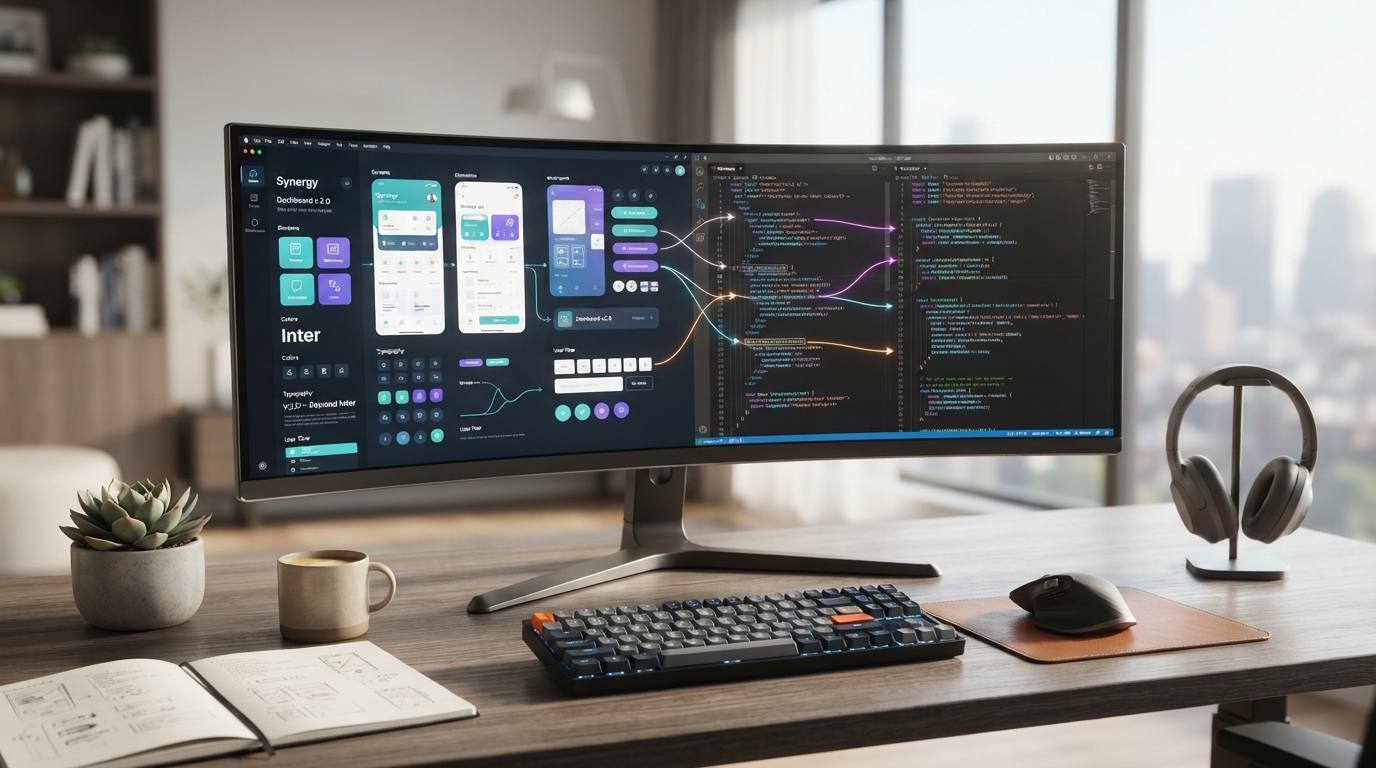
This is one of the most common questions beginners ask before even starting to learn design, and the fear of needing to code often stops genuinely interested people from pursuing UI/UX design at all, based on a misunderstanding of what the role actually requires.
The Short, Honest Answer
No, coding is not a core requirement for UI/UX design work. The role is fundamentally about understanding users, structuring information logically, and designing interfaces that are intuitive and effective, all of which happens in visual design tools like Figma, not in a code editor. Confusing design with development is one of the more common misconceptions that keeps genuinely interested beginners away from this field unnecessarily.
This distinction exists for good reason in most real product teams: designers and developers are typically separate roles precisely because each requires deep, specialized focus, a designer spending significant time learning to code would generally have less time to develop the deeper design thinking and user research skills their actual role depends on.
What UI/UX Designers Actually Spend Their Time Doing
The real day-to-day work involves understanding user needs through research, mapping out how a product should logically flow through wireframes, building interactive prototypes that simulate the real experience, and testing designs with actual users to catch problems before they become expensive to fix later in development.
None of this requires writing a single line of code. It requires empathy for how real people think and behave, logical structuring of information, and genuine visual and interaction design skill, all learnable through dedicated design training rather than programming courses.
Where a Little Technical Understanding Does Help
While coding itself isn't required, having a basic, working understanding of what's technically feasible, why certain interactions are easier or harder to build, genuinely helps designers communicate more effectively with development teams and design more realistically within real technical constraints.
This kind of light technical literacy is very different from actually learning to code, it's more about understanding broad concepts and limitations well enough to have productive conversations with developers, not about being able to build the product yourself.
How VAA Global's UI/UX Design Course Handles This
VAA Global's UI/UX Design course runs 10 weeks and focuses entirely on genuine design skills, wireframing, user research, prototyping, and usability testing, using tools like Figma, Adobe XD, and Miro, without requiring or teaching coding, since that's simply not what the role demands.
The course does build genuine understanding of design handoff, how to prepare and communicate your designs clearly enough that developers can implement them accurately, which is the actual collaboration skill that matters, not coding ability itself.
Common Misconceptions Worth Clearing Up
A common misconception is that "tech career" automatically implies coding, when the broader tech industry genuinely includes many non-coding, highly technical-adjacent roles, design, product management, business analysis, that require deep domain expertise without requiring programming skill specifically.
This misconception keeps genuinely talented, design-minded people away from a field they'd likely enjoy and succeed in, simply because they've assumed a technical barrier that doesn't actually exist for this particular career path.
What Your First Few Weeks Actually Look Like
Early weeks in VAA Global's UI/UX Design course focus entirely on wireframing and user research, building genuine comfort mapping out structure and understanding real user needs before any visual polish enters the picture at all.
The middle weeks bring in prototyping, turning static wireframes into interactive, testable experiences, and the final weeks tie in usability testing and design systems, building a complete portfolio piece before the two-month internship, none of which involves writing a single line of code.
By the end, what you have to show for the course is a genuine, complete design portfolio built entirely on design thinking, not a single line of code required anywhere in the process.
Whatever direction your interest in design takes afterward, that foundation stays valid.
It travels with you regardless of what specific tools a future employer happens to use.
That is genuinely reassuring for anyone who has held back from design purely out of coding anxiety.
If you're still weighing this against other paths, the free Career Compass quiz at vaaglobal.tech/career-compass can help you figure out which course genuinely fits your goals.
Once you're genuinely job-ready, VAA Global Talent at talent.vaaglobal.tech connects graduates directly with employers actively hiring for exactly this kind of skill.
VAA Global's free CV and LinkedIn review tool at vaaglobal.tech/cv-review can also help you present this experience clearly once you're ready to apply.
FlexJobs Remote Work Trends Report has published research specifically on this, and it lines up closely with what's described here.
Research from GitLab Remote Work Report backs this up, consistently finding that this pattern holds across the wider remote job market, not just as an isolated trend.
This isn't just anecdotal either, Upwork Freelance Forward Research has published findings that point in exactly the same direction.
Starting Your Design Career Without Coding
If design has genuinely interested you but coding felt like a barrier, that barrier doesn't actually exist for this specific path. You can apply to VAA Global's UI/UX Design course and start building real design skills.